Regenerating Alaska,
Inspiring the World
Deploying 1 kW distributed generators and household clean-water systems across dispersed Yakutat homesteads on Tlingit Ancestral land — and turning $200,000 into $1,000,000 of deployed infrastructure with zero equity dilution.
Keetá Yeìl · Raven Rolland Gregg
The Peace Engineer · CFEO & Board Member, Earth Technical Institute · Founder, Situk.Institute & UCRC.Institute
Yakutat Tlingit Tribe · Lukaaẋ.ádi Clan · Yakutat, Alaska
The Challenge
King Salmon on the Table; a $2M Barge in the Harbor
Yakutat, Alaska is surrounded by natural abundance — yet it pays some of the highest energy prices in America while its wealth sails away on a diesel barge.
$0.00/kWh
Diesel electricity cost in Yakutat
~4× the U.S. average
$0M
Leaving the community every year for fuel
from a village of ~600 people
0%
Local clean power generation today
every kilowatt arrives by barge
~0%
Salmon value captured locally
catch is processed & exported by outside operators
Electricity Cost Comparison ($/kWh)
Yakutat pays roughly four times the national average — the pilot targets an energy cost reduction of at least 50% vs diesel.
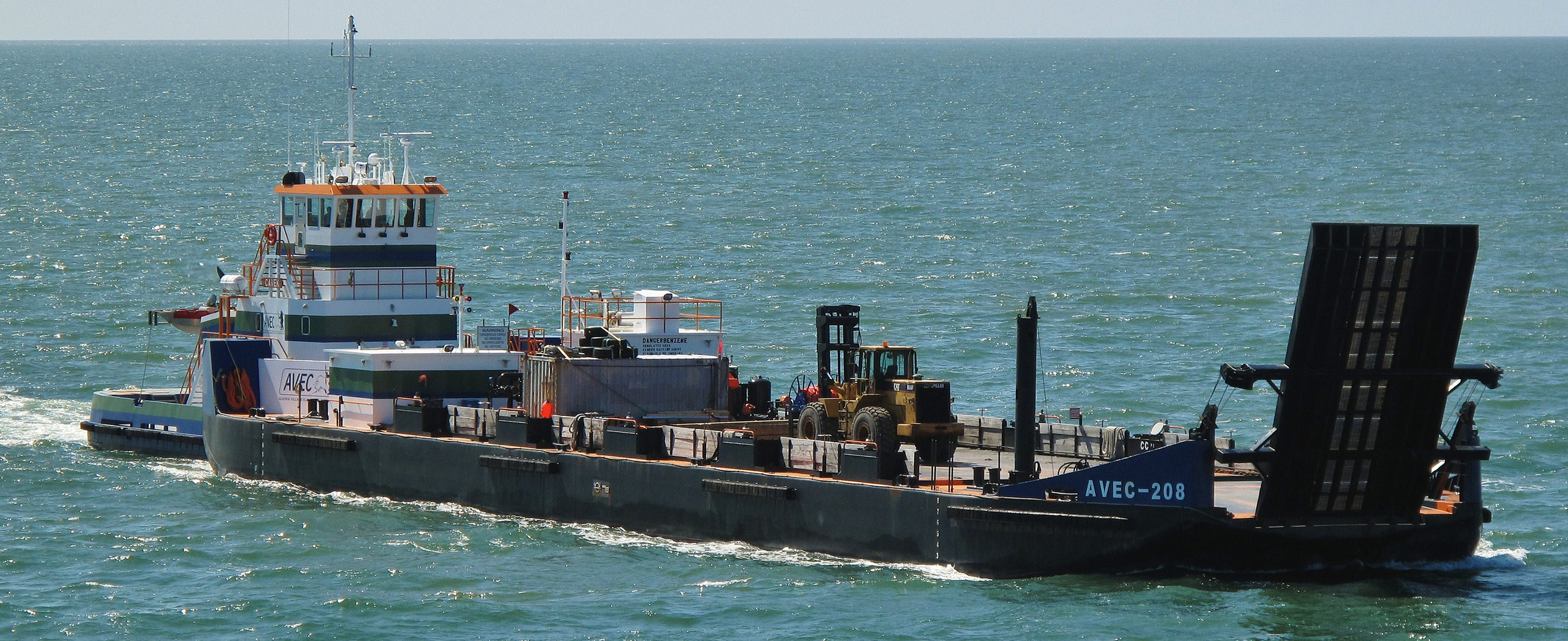
The diesel barge: Yakutat’s entire power supply arrives by sea.
“King salmon on the table; a two-million-dollar barge in the harbor.”
— Keetá Yeìl, The Peace Protocols. Scarcity here is not natural — it is engineered. And if scarcity can be engineered, so can abundance.
The Vision · OpenSource.Town
If It Can Be Done Here, It Can Be Done Anywhere
OpenSource.Town documents every step of building the most decentralized regenerative town on Earth — in one of the harshest climates on the planet — and publishes it all open-source for the world to replicate.
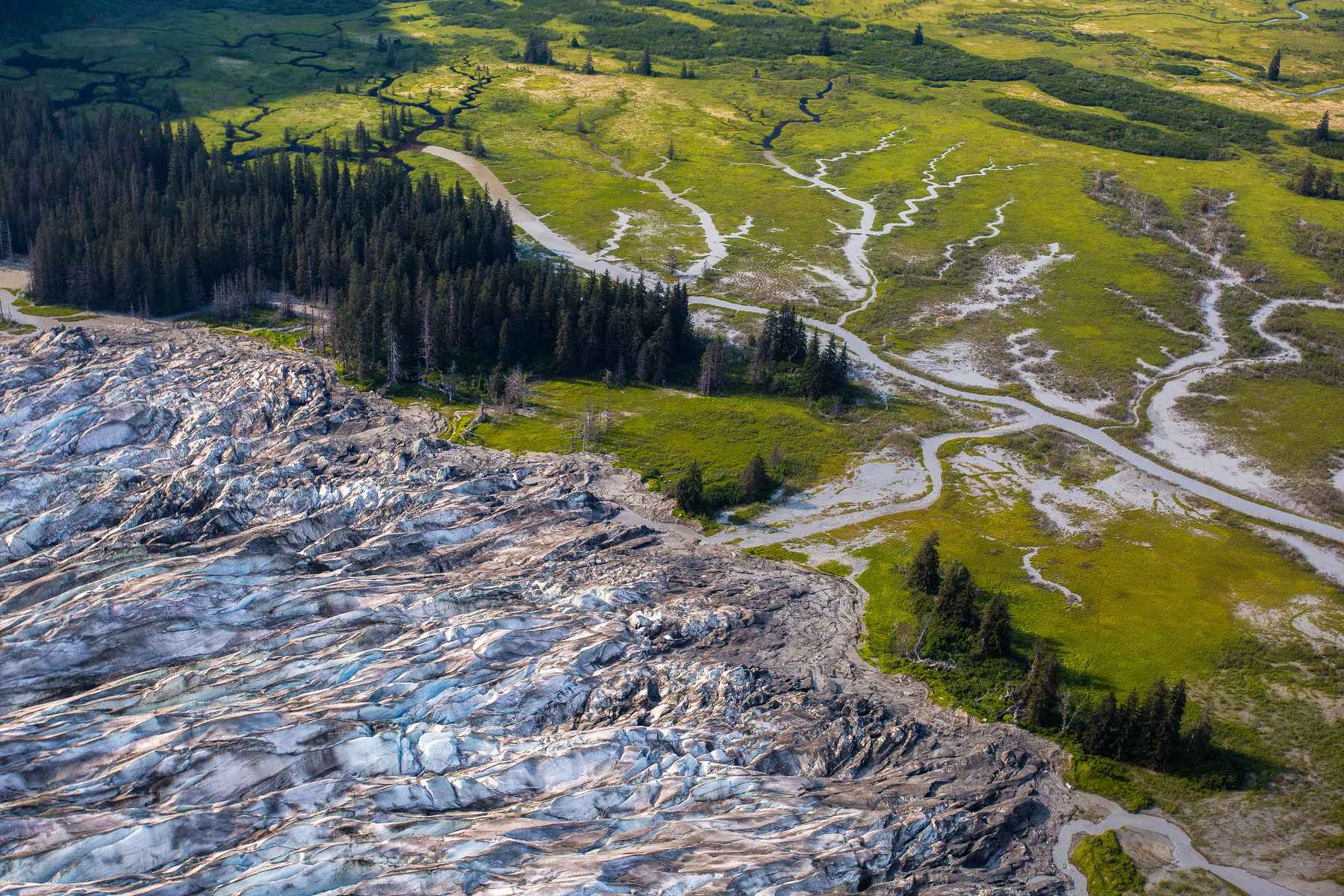
Harshest Climate
Sub-arctic coastal Alaska — the ultimate proving ground
Fully Documented
Every build, budget & metric published CC BY 4.0
Globally Replicable
A blueprint for 54 regenerative hubs worldwide
Local regenerative power at 50%+ below diesel cost
$2M/year kept circulating in the watershed
Cooperative captures the full salmon value chain
Peace Engineer campus trains the next generation
The OpenSource.Town simulator runs the Peace Protocols equations live — drag a town from diesel dependency to sovereignty and watch Pe and CVI rise in real time.
Peace Protocols
The Mathematics of Abundance
A 34-page peer-review-ready framework proving — via Lyapunov stability analysis — that abundance is the stable attractor and scarcity is a fragile saddle point. The math agrees with the elders.
Peace Efficiency Index
Pe = Σ ( Rᵢ / Dᵢ )
Summed across the 12 Resource Realms — regenerative output Rᵢ relative to dependency Dᵢ. Pe rises as a community produces more locally and depends less on imports. Measured quarterly, published openly.
Community Vitality Index
CVI = (H + Dg + F) / (S + Db + De)
Health + Dignity + Freedom over Scarcity + Debt + Dependency — a direct measure of human flourishing. Together with Pe, it makes peace a measurable engineering outcome, not a sentiment.
The Seven Sovereign Bodies
Spiritual
Coherence with Source
Mental
Systems Literacy
Emotional
Heart Coherence
Physical
Resource Security
Economic
Freedom from Debt
Cultural
Identity and Story
Political
Decentralized Governance
The Twelve Resource Realms
Each realm carries a falsifiable index, measured quarterly against matched controls. Tap a realm to explore.
Local clean generation ÷ total demand
ETI 1 kW modular generators, IPC technology, solar-wind microgrids, hydrogen storage. Yakutat starts near 0% local power — every kilowatt is imported diesel.
Methodology
The 6 D’s of Regenerative Engineering
A disciplined pipeline from first observation to protected, replicable deployment — applied to Yakutat and every future ReGen Hub.
1. Discovery
Map the community’s 12-realm baseline. In Yakutat: near-0% local power, $0.53/kWh diesel electricity, ~$2M/year leaving the watershed for fuel, world-class salmon processed and exported by outside operators.
Core Technologies · Earth Technical Institute
Energy + Clean Water in One Installed System
The Yakutat Distributed Energy Resilience Program pairs ETI’s 1 kW modular generator with its household water purification unit — coupling the foundation’s two priority areas in a single system, hardened for one of the harshest climates on Earth.
1 kW Modular Generator
Earth Technical Institute · Core program deliverable
Validated to TRL 6–7
≥0% household energy cost reduction vs. delivered diesel · zero grid extension required
- Sized for a single dispersed household — transportable by small craft or ATV, serviceable in the field
- Environmentally hardened for Alaskan coastal duty: marine air, freeze-thaw, storm loading, cold-start
- Corrosion-resistant materials validated in KemSolver; FyCore embedded control & telemetry
- Instrumented pilot at ≥5 Yakutat homesteads with a rapid field-service loop
Household Water Purification Unit
Earth Technical Institute · Prototype-ready · Runs on generator power
$20,000 integration pilot
0+
pilot homesteads with purified water
0
foundation priority areas coupled — energy & water
0%
energy-reduction class desalination follow-on
- Piloted on generator power at every deployment site — clean water where none was piped
- Backed by ETI’s desalination architecture (75% energy-reduction class) for a follow-on coastal water program
- Built on the open-source IPC.engineer disclosure lineage that initiated the JPL relationship
- Foundation for the Cannon Beach WWII-site brownfield remediation extension
Budget
$200,000 — Every Dollar Accounted For
The Addendum A budget under the Earth Technical Institute partnership: 77% flows directly into hardware, testing, deployment and community training — with ETI engineering labor delivered at cost and program management under CFEO financial controls.
Hover or tap a slice for line-item details
Generator Engineering & Prototyping
$62,000Materials, fabrication, and instrumentation of first-article 1 kW generators — ETI engineering labor at cost. The core program deliverable, hardened for Alaskan coastal service.
Cost-per-Impact
- Fully installed energy + clean water at ≥5 dispersed homesteads — barge/air freight included
- $18K trains ≥6 tribal members to install & maintain, with local-hire stipends
- $200K unlocks an $800K BIA-guaranteed bank facility — $1M capitalization, zero equity dilution
The 5:1 Leverage Play
How $200,000 Becomes $1,000,000
The IEEE grant is not just funding — it is the 20% equity that qualifies the project for the BIA Indian Loan Guarantee Program, unlocking a further $800,000 of guaranteed lending.
IEEE Foundation Grant
$0
= the required 20% borrower contribution
BIA Indian Loan Guarantee Program
$0
commercial bank facility · BIA-guaranteed
Total Regenerative Capital
$0
5:1 leverage · zero equity dilution
The Multiplier Effect
Every ILGP Requirement Already Met
- Enrolled member of a federally recognized tribe — Yakutat Tlingit Tribe ✓
- Borrowing entity ≥51% owned by the applicant, an enrolled tribal member ✓
- Grant-funded assets & program equity = the required 20% borrower contribution ✓
- BIA guarantee enables an $800K commercial bank facility, shopped competitively for best rate ✓
The Native-owned entity contracts ETI for engineering delivery — keeping program economics inside the tribal economy. BIA program contact: Jennifer Caesar, ILGP program lead of ten years, a six-year professional relationship with the applicant.
Impact Calculator
Model the Impact Yourself
Slide the parameters to see what regenerative infrastructure means for a village of ~600 people paying $0.53/kWh. Calculations use the Addendum A target of a 50% energy cost reduction vs diesel and standard diesel emission factors.
Adjust the Parameters
Yakutat has roughly 300 households. 144 students is one full Dunbar-compatible chapter of the 7,777 Peace Engineers network.
150
Homes powered by regenerative energy
$333,900
Annual energy savings kept in the watershed
882 tons
CO₂ displaced per year (diesel offset)
21
Local jobs created (energy + coop + campus)
$175,000/yr
Added salmon value captured by the cooperative
40
future engineers certified through the free 12-realm curriculum — each one teaches the next cohort
The Campus
90 Acres at the Mouth of the Situk River
On Tlingit Ancestral land in Yakutat, the Situk Institute campus demonstrates all 12 Resource Realms in one integrated site — where the river that sustained the Lukaaẋ.ádi Clan for millennia becomes a living laboratory.

Situk River · Yakutat, Alaska · Lukaaẋ.ádi Territory
Why This Land Matters
The Situk is one of the most productive salmon rivers in Southeast Alaska — world-renowned king salmon and steelhead runs that sustained the Lukaaẋ.ádi Clan for over ten thousand years. The campus is the first regenerative engineering institute built on federally recognized tribal ancestral land, designed to keep every realm of value in the watershed.
Twelve planned districts — one for each Resource Realm. Tap to explore.
Food Sovereignty
The Situk River Fishermen’s Cooperative
Today the catch is processed and exported by outside operators. The cooperative gives local fishermen ownership of the entire value chain — powered by the same regenerative energy the grant deploys.
1. Buy
Fair dockside prices paid directly to local fishermen
2. Process
Local processing — value-added work stays in Yakutat
3. Flash-Freeze
Powered by regenerative energy, zero diesel
4. Store
Cooperative cold storage owned by the community
5. Market
A premium Indigenous-stewarded wild salmon brand
6. Sell
Full retail value captured in the watershed
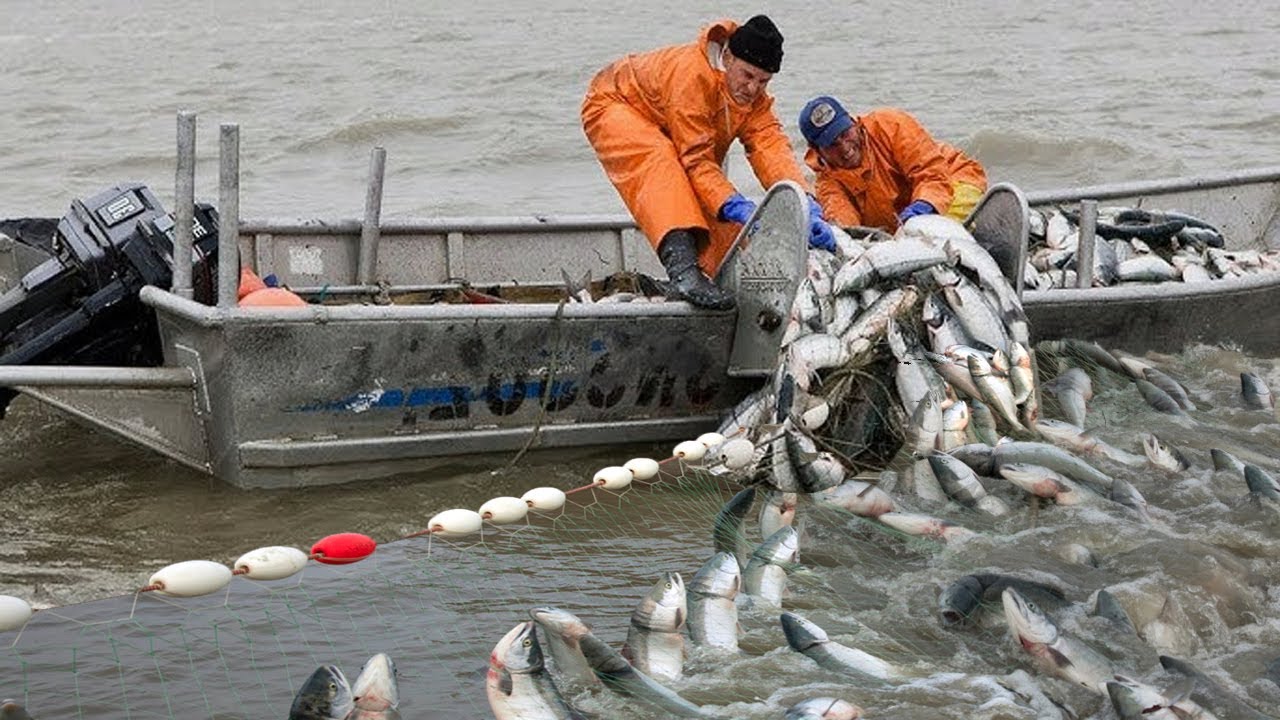
Value Captured Per Pound of King Salmon
Flash-freezing and cold storage — the most energy-intensive steps — run on regenerative power at 50%+ below diesel cost, making local processing economically viable for the first time. Traditional Tlingit fishing practices are preserved while the community captures more than double the value per fish.
A Geography of Trust
The Pacific Triangle of Regeneration
Three nodes — Yakutat, Colville, and Hawaii — where the economics of fuel, food, and shipping are most visible, and where Indigenous Pacific stewardship makes the cultural logic self-evident.
Tap a node to explore · Washington ↔ Alaska ↔ Hawaii

Yakutat, Alaska
ReGen Hub #3
- 90-acre Situk Institute campus on Tlingit Ancestral land
- Pilot deployment of ETI 1 kW modular generators + water purification
- $0.53/kWh diesel → ≥50% energy cost reduction target
- Fishermen’s cooperative on the Situk River
- Population ~600 — ideal test case for measurable impact
Sustainability
A Grant That Builds Its Own Revenue
The IEEE investment seeds ventures that fund operations long after the grant period ends — hard-asset revenue, education, digital services, and cooperative economics.
Energy Sales
Distributed household power at ≥50% below the delivered-diesel baseline — hard-asset revenue from the first installed pilot units, with a licensing pathway across rural Alaska.
OpenSource.Enterprises
Self-hosted open-source workplace migrations replacing Google/Microsoft/Salesforce — 40–70% cost savings, 80+ apps, full data sovereignty. Liberty, Sovereign & Federation tiers.
Online Regenerative School
12 realms of courses within the Peace Engineer certification — Cadet → Steward → Architect. Education and membership revenue with a global reach.
Basalt Manufacturing
Plasma-furnace basalt composite: fire-, UV-, corrosion-resistant, fully recyclable, outperforms fiberglass. 51% Alaska Native-owned & SDB-certified — opens federal set-aside contracting lanes.
Fishermen’s Cooperative
Buy, process, flash-freeze, store, market and sell Situk River salmon — capturing the full value chain in the watershed.
Product Sales & Licensing
1 kW generator systems, water purification units, basalt vessels, and regenerator units licensed to the 54 planned regenerative hubs and partner communities — through indigenous-nation licensing channels.
By Theorem 1 of the Peace Protocols, regenerative feedbacks are self-reinforcing: once local production exceeds dependency, the system converges to the abundance equilibrium — no perpetual grant funding required.
Measured, Not Promised
Community Impact Dashboard
Quantified 12-month targets from Addendum A — tracked through instrumented telemetry, gated milestone reviews, and open publication. Falsifiable by design.
0+
Dispersed homesteads powered
instrumented pilot units
0%+
Household energy cost reduction
vs. delivered diesel baseline
0%
Pilot sites with purified water
purifier running on generator power
0+
Tribal members trained
installation & maintenance crews
0+
Local jobs / paid roles created
local hires & training stipends
0
IEEE-grade final report
+ public success-story package
Execution Plan
12 Months from Grant to Public Proof
Four engineering phases with six gated milestones: design frozen at TRL 6–7 before any field spend, pilot power flowing by Q3, and the BIA facility accelerating — never gating — the program.
Months 1–3
Phase 1 — Design Finalization & Hardening
- 1 kW generator adapted for Alaskan coastal duty
- Corrosion-resistant materials validated in KemSolver
- Enclosure sealing, cold-start & field-service design
- M1 gate: hardened design release (TRL 4→5)
Months 3–7
Phase 2 — Prototype Build & Validation
- First-article prototype units fabricated
- Independent verification by ETI validation group
- Environmental & endurance testing complete
- M2–M3 gates: design freeze at TRL 6–7
Months 7–11
Phase 3 — Yakutat Pilot Deployment
- Pilot units installed at ≥5 dispersed homesteads
- Anchored at the 90-acre Situk River land base
- Local tribal members trained to install & maintain
- Units instrumented for performance telemetry
Months 10–12
Phase 4 — Water Purifier Integration
- Household water purification piloted on generator power
- Integrated energy + clean-water demonstration (M5)
- Cannon Beach brownfield remediation extension scoped
- BIA loan guarantee facility advanced in parallel
Q4
Public Proof & IEEE Story
- M6 gate: final report & IEEE success-story package
- Instrumented telemetry results published
- Replication playbook for the 54 planned regenerative hubs
- Sponsor acceptance review
Leadership
The Team Carrying This Forward
Indigenous leadership, operational discipline, and 15+ years of renewable-energy commercial experience — a lean team with everything on the line and everything to prove.
Keetá Yeìl — Raven Rolland Gregg
Principal Investigator · CFEO & Board Member, Earth Technical Institute
Enrolled member of the Yakutat Tlingit Tribe, Lukaaẋ.ádi Clan. Author of the Peace Protocols and the open-source IPC.engineer disclosure. Raised $17M for disruptive energy technologies; delivered a $16M water purification contract; co-founder of Pronoia Capital; co-heir of the 90-acre Situk River pilot site.
Earth Technical Institute
Institutional Engineering Partner
Deep-technology research institute developing IP to TRL 6–7: co-CEOs Tony (systems architecture) & Xander (mathematics/theory), chief programmer Brandon (creator of the T3 language), Kira (AI & infrastructure), Chris (projects director), and Christian (PR — reviewer of record). Formal internal information classification and quality-validation system.
Joseph Loud
President, Peace Engineers LLC
President at Associated Energy Developers. 15+ years in renewable energy business development, financial strategy, and scalable infrastructure — anchoring the ecosystem’s commercial discipline.
Champion: Steven McClure — NASA Jet Propulsion Laboratory & IEEE Foundation Board, of Tlingit & Haida heritage — invited this application after seeing the regenerative engineering work built on the Peace Protocols.
Advancing Technology for Humanity
Alignment with All Five IEEE Foundation Pillars
This is the success story the IEEE Foundation exists to create: Indigenous engineering, open-source technology, published IEEE research, and a measurable path from grant to global model.
Illuminate
Addressing global challenges through technology
Deploys 1 kW distributed generators with household water purification across dispersed Yakutat homesteads — cutting household energy costs ≥50% vs. delivered diesel, in the foundation’s two priority areas: energy and clean water.
Educate
Supporting the next generation of engineers
23-lesson free IPC curriculum, Peace Engineer certification (Cadet → Steward → Architect), and 12 realms of regenerative education — an Indigenous STEM pipeline.
Engage
Expanding public appreciation for technology
OpenSource.Town live simulator, open-source publication model, and all research released CC BY 4.0 for anyone, anywhere.
Energize
Celebrating technological excellence
Published IEEE papers in the archive, a mathematically rigorous framework with a Lyapunov stability proof, and hardware validated to TRL 6–7 under a formal institutional verification process.
Future
Shaping long-term destinies beyond this generation
7,777 Peace Engineers, 54 planned regenerative hubs, and a treaty framework for regenerative civilization — a ten-thousand-year vision.
Why this grant creates a signature success story
Published IEEE papers already sit in the IPC research archive. The framework carries a formal Lyapunov stability proof. The results will be published CC BY 4.0, quarterly, against matched controls — giving IEEE a rigorously documented, Indigenous-led, open-source energy transformation to stand behind.
The Broader Mission
The International PEACE Treaty
Beyond Yakutat lies a five-volume treaty framework — drafted for nations, tribes, cities, corporations, and universities — inviting world leaders to sign on to engineered abundance.
Formal Treaty Document
Diplomatic-grade protocol treaty across all 12 realms
Executive Summary for Leaders
The one-page case: make scarcity obsolete
Implementation Playbook
The 100-day launch for any community
Technical Standards Manual
Falsifiable metrics for every realm
Model National & Tribal Legislation
Ready-to-adopt legal templates
“The treaty does not ask the world to manage scarcity more politely. It asks the world to make scarcity obsolete.”
— Volume II, Executive Summary for Leaders
Peace = Abundance + Decentralization + Coherence
Yakutat is the first signature deployment — the proof that lets nations, tribes, and cities sign with confidence.
Ready for Adoption
Model legislation for nations, tribal resolutions, city ordinances, corporate compacts, and ReGen Hub charters — already drafted.